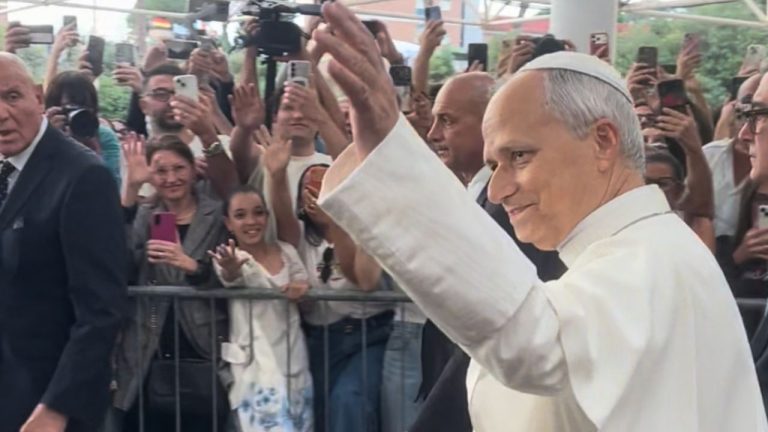

DUBAI, United Arab Emirates – In a stark reminder of the fragility of global peace, Bishop Anthony Randazzo of Broken Bay has found himself at the heart of a rapidly intensifying conflict in the Middle East. The Australian prelate, who was travelling to Rome for official meetings, is currently stranded in Dubai following a series of dramatic military escalations that have sent shockwaves through the region. This development comes as the Middle East faces its most significant military confrontation in decades, following joint U.S.-Israeli strikes that have fundamentally altered the geopolitical landscape.
A Journey Interrupted by Violence
Bishop Randazzo’s journey began on Saturday morning when he departed Sydney, bound for the Eternal City. However, his scheduled stopover in Dubai coincided with a massive escalation in hostilities. On February 28, 2026, joint airstrikes by Israel and the United States, dubbed “Operation Epic Fury,” targeted Tehran and other Iranian cities, resulting in the death of Supreme Leader Ayatollah Ali Khamenei.
In the ensuing hours, Iran launched retaliatory strikes against Israel and several Gulf nations, including the United Arab Emirates and Qatar. Dubai International Airport, a major global transit hub, came under missile attack shortly after Bishop Randazzo’s arrival. The Bishop, along with numerous other travelers, was evacuated from the airport and is currently safe in a local hotel, awaiting the reopening of airspace.
Despite the harrowing circumstances, Bishop Randazzo remains a voice of spiritual calm. “While tensions remain high here in Dubai, I want to assure everyone that I am safe,” he stated in a message to his diocese. He urged the faithful to turn to prayer:
“In moments like these, I urge us all to lift our prayers to God and intercede for peace in our time. Violence only begets more violence, and it is always the innocent who suffer most. Let us pray for the people of the Middle East, regardless of nationality, culture, or religion. May we seek peace, pursue peace, and speak peace”.
Pope Leo XIV’s Urgent Appeal for Dialogue
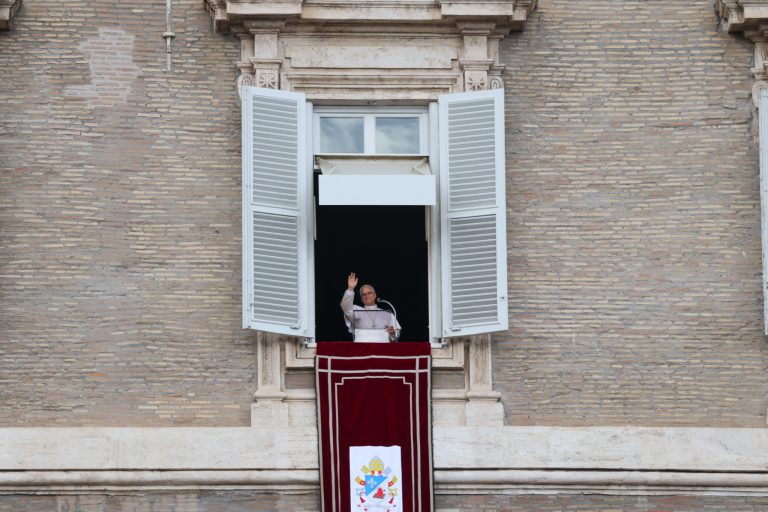
From the Vatican, Pope Leo XIV has expressed his “deep concern” over the unfolding tragedy. During his Angelus address on Sunday, March 1, the Holy Father issued a heartfelt plea for an end to the spiral of violence, warning of an “irreparable abyss” if diplomacy is not restored.
“Stability and peace are not built with mutual threats, nor with weapons, which sow destruction, pain, and death, but only through a reasonable, authentic, and responsible dialogue,” the Pope declared. He called upon all parties involved to recognize their moral responsibility to protect the common good and the lives of innocent civilians, emphasizing that diplomacy must recover its role in promoting peaceful coexistence founded on justice.
| Key Event | Date | Impact |
| Operation Epic Fury | Feb 28, 2026 | U.S.-Israeli strikes on Tehran; death of Ayatollah Khamenei. |
| Iranian Retaliation | March 1-2, 2026 | Missile attacks on Israel, UAE, and Qatar; regional airspace closed. |
| Dubai Airport Attack | March 2, 2026 | Bishop Randazzo evacuated; travellers stranded in hotels. |
| Papal Peace Appeal | March 1, 2026 | Pope Leo XIV calls for “authentic dialogue” to avoid an “abyss”. |
The Church as a Beacon of Peace
The current crisis highlights the unique role of the Catholic Church in the Gulf region. With over 1.1 million Catholics in the Apostolic Vicariate of Southern Arabia, primarily expatriate workers, the Church serves as a vital spiritual refuge. Bishop Paolo Martinelli, the Apostolic Vicar, has echoed the Pope’s call, urging the faithful to maintain “calm and serenity” and to turn to the Rosary daily as a spiritual weapon for reconciliation.
As the conflict threatens to expand, the Church’s mission remains focused on the dignity of every human person. The vulnerability of migrant communities and travelers like Bishop Randazzo serves as a poignant reminder that in war, it is always the innocent who bear the heaviest burden. The Church continues to advocate for a peace that is not merely the absence of war, but the presence of justice and the fruit of authentic dialogue.
A Spiritual Resolution: Turning to the Prince of Peace
In these times of great uncertainty and rising violence, we are called to a profound spiritual response. Let us turn to the Sacrament of Confession, seeking to root out the seeds of anger and division in our own hearts, so that we may become true instruments of God’s peace. Let us spend time in Eucharistic Adoration, placing the suffering people of the Middle East and all those stranded or in danger before the Real Presence of Christ, the Prince of Peace.
The Holy Rosary is our constant companion in times of trial; let us pray it daily for the conversion of hearts and the silencing of weapons. Through active participation in the Holy Mass and the devout reception of the Eucharist, we are united with the suffering of Christ and strengthened to witness to His love in a broken world. Finally, let us immerse ourselves in Sacred Scripture, finding in the Word of God the promise of a peace that the world cannot give.
To remain informed about Catholic life, teachings, and global Church developments, readers may be encouraged to visit www.ewtnvatican.com for trusted Catholic news and resources.