At a time when knowledge is so easily attainable thanks to artificial intelligence, St Bonaventure, a Doctor of the Church, teaches us that wisdom is more valuable than knowldge and that it begins not in the lecture hall but in prayer.
By Amy Servais, July 13, 2026 – EWTN Great Britain
We live in an age where we have vast amounts of information at our fingertips, yet perhaps wisdom has never felt so elusive.
Every day we carry libraries in our pockets. Artificial intelligence can answer our questions in seconds. Universities produce experts in every conceivable discipline. Yet despite all our knowledge, we often seem no closer to understanding ourselves, one another, or God.
Eight centuries ago, a quiet Franciscan friar offered a remedy that feels remarkably modern.
His name was St Bonaventure.
According to tradition, St Bonaventure was born Giovanni di Fidanza around 1221 in the Italian town of Bagnoregio. As a young child, he became gravely ill, and his mother sought the prayers of Saint Francis of Assisi. St Francis prayed for the boy’s recovery, and when the child unexpectedly survived, he is said to have exclaimed, “O buona ventura!” – “O good fortune!” or “What a blessed outcome!” The name remained with him for the rest of his life.
Whether every detail of the story can be historically verified is almost beside the point. St Bonaventure himself always regarded his life as a gift received through God’s providence and the prayers of St Francis.
That gratitude shaped everything that followed.
Entering the Franciscan Order while still a young man, St Bonaventure soon distinguished himself not merely for his intelligence but for his holiness. He studied at the University of Paris in the Franciscan intellectual milieu associated with the great English Franciscan Alexander of Hales, one of the first masters to integrate the newly translated works of Aristotle into Christian theology. St Bonaventure inherited Alexander’s intellectual legacy but transformed it with a profoundly contemplative vision.
For St Bonaventure, theology was never simply an academic exercise. It was a path to union with God.
At a time when medieval universities were flourishing and theological debates could become highly technical, St Bonaventure repeatedly reminded his students that wisdom begins not in the lecture hall but in prayer. Knowledge without holiness, he believed, risks becoming little more than cleverness. The true theologian is not merely someone who knows about God, but someone who knows God.
It is difficult to imagine a more timely lesson.
We live in an age that prizes expertise. Information has become one of our greatest commodities. Yet St Bonaventure would gently ask whether knowledge alone can satisfy the deepest longings of the human heart. Facts can explain the world. They cannot teach us how to love.
His answer lay in what he called wisdom.
Unlike information, wisdom is not accumulated; it is received. It grows as the soul is purified by grace. St Bonaventure spoke of a wisdom that cannot be reduced to formulas or possessed like an object. True wisdom is the work of the Holy Spirit, shaping the whole person rather than merely informing the mind.
This conviction shines through his two best-known spiritual masterpieces.
In The Journey of the Mind into God (Itinerarium Mentis in Deum), written after a retreat on Mount La Verna, where St Francis received the stigmata, St Bonaventure describes the Christian life as an ascent. Creation, Scripture, reason, and finally contemplation become successive steps by which the soul is drawn ever more deeply into the mystery of God. The destination is not simply greater understanding but loving union with Him.
His companion work, The Tree of Life, invites the reader to contemplate the life of Christ through meditation upon His birth, ministry, Passion, and glory. It is theology transformed into prayer.
St Bonaventure’s gifts were needed not only in the classroom but in the life of the Church. Barely thirty years after the death of St Francis, the Franciscan Order found itself divided over how faithfully its founder’s radical poverty should be interpreted. Elected Minister General in 1257, St Bonaventure became the steady hand that held the brothers together. Without diluting St Francis’s vision, he gave the rapidly growing Order the structure and unity it needed to endure.
He also composed what became the most influential medieval biography of St Francis, preserving not merely the facts of the saint’s life but the spirit that animated him. It is largely through St Bonaventure that later generations came to know the Poverello of Assisi.
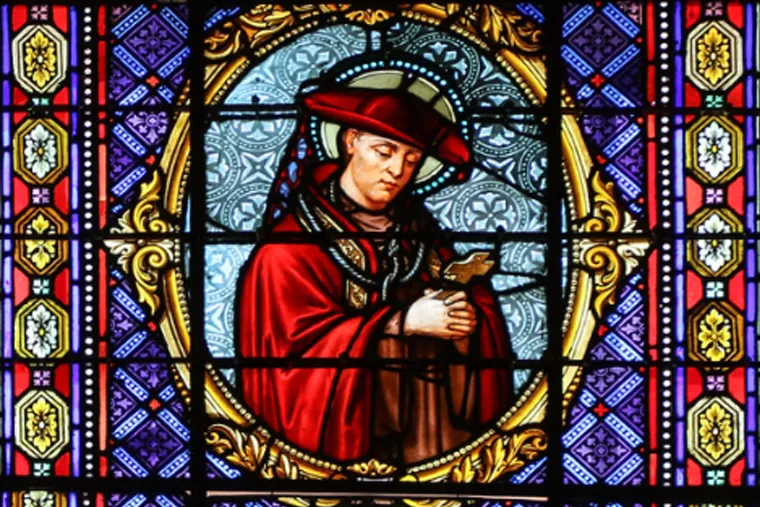
Later appointed Cardinal-Bishop of Albano by Pope Gregory X, St Bonaventure played a leading role in preparing the Second Council of Lyons before dying during the council in 1274. He was later proclaimed a Doctor of the Church and became known as the Seraphic Doctor, a title reflecting the warmth, beauty, and contemplative depth of his theology.
His writings continue to influence theologians, philosophers, and spiritual writers to this day.
It is no wonder that Pope Benedict XVI held St Bonaventure in such affection. As a young theologian, Joseph Ratzinger devoted his habilitation thesis to St Bonaventure’s theology of history, and throughout his pontificate, he frequently returned to the Franciscan Doctor as a model of the harmony between faith and reason, study and sanctity. Pope Benedict recognised in St Bonaventure something our own age desperately needs: the reminder that theology is not merely about knowing more, but about becoming holy.
Yet perhaps St Bonaventure’s greatest gift to the modern world is not any single book.
It is his refusal to separate learning from sanctity.
We often assume that education makes us wise. St Bonaventure gently reminds us that education can make us informed, articulate, and accomplished, while still leaving our hearts untouched. Wisdom begins when knowledge becomes love, when truth is not merely analysed but lived.
In an age increasingly fascinated by artificial intelligence, St Bonaventure offers an unexpected challenge. Machines may one day know almost everything that can be known. But wisdom, holiness, and love cannot be automated.
The longest journey any of us will ever undertake is not across the world or into space.
It is the journey of the mind and the heart into God.
Eight centuries after his death, St Bonaventure still reminds us that wisdom is not found by accumulating information, but by allowing ourselves to be transformed by grace. In an age captivated by knowledge, he quietly points us towards holiness.
As he himself wrote:
“If you wish to know how these things come about, ask grace, not instruction; desire, not understanding; the groaning of prayer, not diligent reading; the Bridegroom, not the teacher; God, not man.”
Perhaps that is the lesson our generation needs to hear.

Amy Servais is Studio and Production Manager at EWTN Great Britain, based in Walsingham, where she lives with her family. A video editor by profession, she has a deep love for the Church, evangelisation, and telling beautiful, faith-filled stories. She also writes reflective pieces drawn from her own experiences of faith.
Article sourced from EWTN GB and shared at EWTN Australia.