
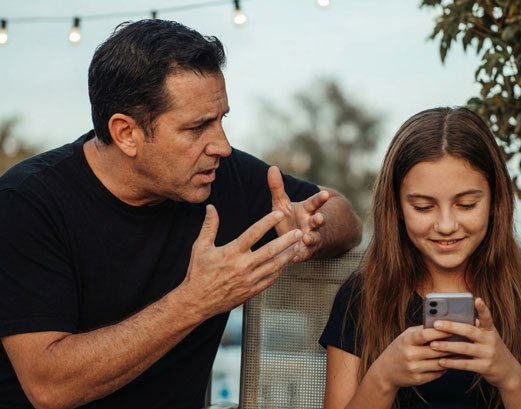
Sydney, Australia—As the Australian summer begins, a new piece of legislation has come into effect, aiming to keep children under the age of 16 off major social media platforms. The Online Safety Amendment (Social Media Minimum Age) Act 2024, which took effect on December 10, prohibits minors from creating or retaining accounts on sites like Facebook, Instagram, TikTok, and X 1. While the intent is to safeguard the young, experts, including those from the Catholic educational sphere, caution that this legislative barrier may be creating a dangerous “false sense of security” for parents and policymakers alike.
The new law requires age verification—which can involve providing government ID, credit card details, or even a selfie—for users of these age-restricted platforms. Although there are no legal consequences for children who manage to circumvent the ban, the focus is squarely on placing the obligation on the social media companies themselves.
The Unintended Consequences for the Digital Generation
The reaction to the ban has been mixed, highlighting a complex reality that politicians may have overlooked. For many young people, social media is no longer merely a recreational tool but an essential part of their educational and professional formation.
Anna Smith, a teenager and an aspiring performer, noted that platforms like YouTube have become necessary for up-and-coming artists to build portfolios and submit to auditions.
“A lot of the auditions I’ve done, you go to the (social media) page and then they get you to upload something onto YouTube and then you have to send that into them,” Smith explained. “A lot of the older girls, like around 14 to 15 years old, they do all that themselves, they don’t need their parents to do it for them.”
This sentiment underscores a critical point: the ban risks penalizing the digitally literate and motivated young who use these tools for legitimate, developmental purposes.
The Illusion of Safety: A Deeper Ethical Concern
The most significant critique of the new law comes from the academic community, particularly from the perspective of digital literacy and ethical formation. Professor Kathy Mills, an expert in literacies and digital cultures at the Australian Catholic University (ACU), argues that the ban fails to address the root causes of online harm.
“It’s not actually getting to the heart of online harms, and it’s also not getting to the problems that people cite with digital use,” Mills told The Catholic Weekly.
Mills points to deeper issues such as screen addiction and the lack of engagement in face-to-face activities, which are not solved by a simple age restriction. By delaying access until age 16, the law may be creating a “cultural shift” away from phones, but it does so without providing the necessary structural protections.
The core ethical dilemma lies in the trade-off between privacy and protection. Enforcing the ban requires platforms to collect significantly more personal data from users for age verification, a process that itself introduces new privacy risks. The methods of verification—from government ID to biometric data—are highly sensitive, and the potential for this data to be misused or compromised is a major concern for privacy advocates.
The Need for True Digital Stewardship
Professor Mills highlights a crucial legislative gap in Australia compared to other jurisdictions. She notes that the European Union’s General Data Protection Regulation (GDPR) imposes strict privacy and data usage rules on social media companies.
“Australia does not have anything like that, so it would be really important for Australia to have some similar types of rules to ensure that the way social media companies use our private data is used not just for marketing,” Mills argued.
The current law, therefore, focuses on restricting the user rather than regulating the platform. This approach is akin to closing the door to a dangerous room without fixing the structural flaws that make the room dangerous in the first place.
Furthermore, the ban is already proving ineffective in practice. As Smith observed, children are quickly finding ways to circumvent the age verification by using a parent’s or older relative’s ID. “The sites don’t know what’s going on; they don’t know whose ID is being entered in,” she said.
A Call for Conversation and Formation
The Catholic educational sector, which is deeply invested in the holistic formation of young people, sees the ban as an opportunity for dialogue rather than a definitive solution. Clare McMahon, Manager of Wellbeing and Learning at Sydney Catholic Schools, expressed hope that the ban would lead to “greater conversations and awareness.”
The Church’s teaching on technology and media emphasizes the need for critical media literacy—a life skill that empowers individuals to navigate the digital world responsibly, rather than simply being shielded from it. The true path to online safety is not through a legislative ban that can be easily bypassed, but through the patient work of forming consciences and fostering a culture of digital stewardship among families and in schools.
The ban may temporarily reduce the pressure on young people, but without robust data protection laws and a concerted effort to teach critical engagement, the “false sense of security” it provides will ultimately leave the next generation unprepared for the moral and ethical challenges of the digital age.