Christian patience is sometimes the only moral option, Archbishop Anthony Fisher OP explains in a homily reflecting on Pope Pius V, the Battle of Lepanto and Christ’s teaching on the weeds and wheat.
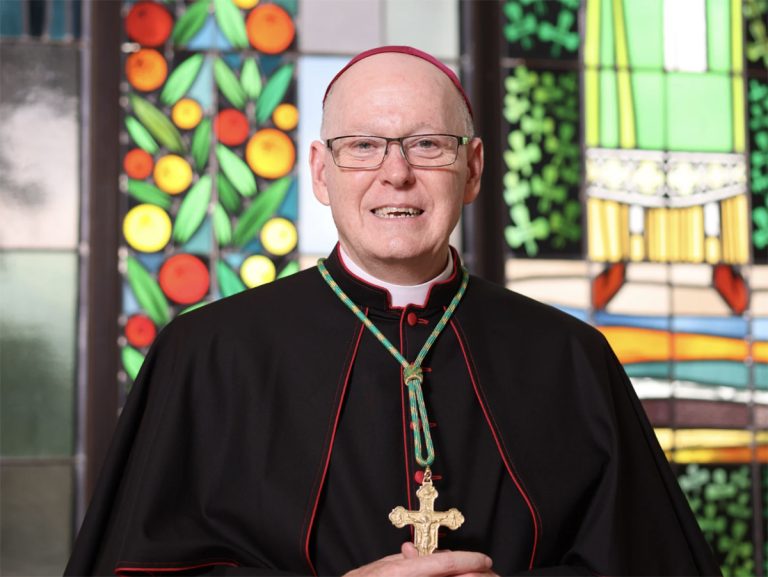
By Archbishop Anthony Fisher OP
This is the edited text of the Homily for the Mass on 16th Sunday in Ordinary Time (Year A). Dominican Sisters of St Cecilia Retreat, Motherhouse Nashville Tn., 19 July, 2026.
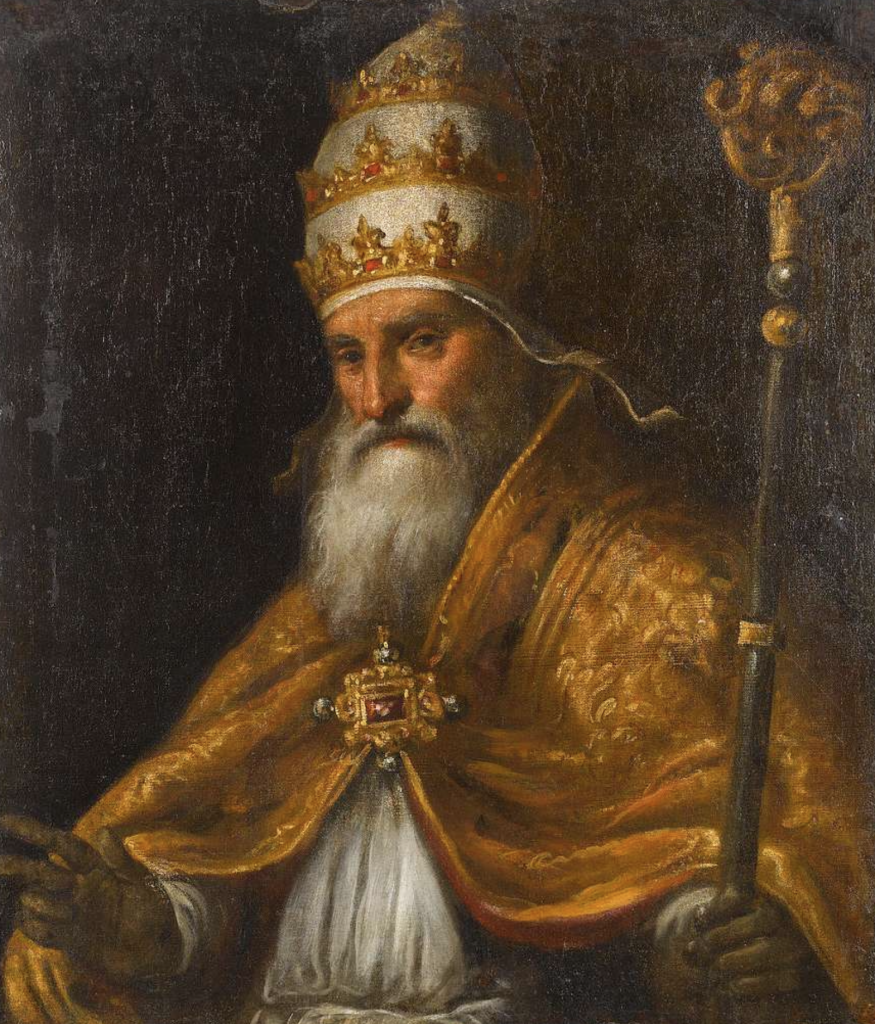
Pope Pius V and a life of reform
Born in 1504, he was named Antonio Ghislieri in baptism, Fra Michele in religion, Pope Pius V in office. He joined the Dominicans at 14 and was ordained priest at 24. He taught theology in Pavia for 16 years and was often Prior, Novice Master or Regent. He was known for his seriousness, asceticism, even severity. Come the Reformation, Paul IV appointed him an official of the Holy Office (1550), then Bishop of Sutri (1556), then Cardinal Prefect of the Inquisition (1557). The next pope, Pius IV, translated him to a grander diocese (Mondovì, 1560), but they had a falling out over nepotism and corruption in the Vatican. When that pope died, St Charles Borromeo campaigned for Ghislieri, saying he was a rare cardinal who was learned, practical and holy. He would be the only sainted pope for nearly a millennium.
Crowned on his 62nd birthday in 1566, Ghislieri continued to wear his Dominican habit, with a hair shirt and bare feet beneath. In the seven years given him, he reformed more than ecclesiastical haberdashery. He applied the decrees of Trent, and combatted blasphemy, heresy and schism. He punished adultery, sodomy and prostitution, and distributed alms to the poor. He drained the literal swamp of the city of Rome and the metaphorical swamp of the Roman Curia. He encouraged officials to live like poor, spiritual friars. He standardised the Mass, breviary, and rosary. He sought to better educate the clergy via seminaries, the laity through the Catechism, and the whole Church by promoting Thomism, naming Aquinas the fifth Latin “Doctor of the Church” (1567). He took on the Huguenots and Elizabeth’s Anglo-Protestants.
So, Pius was no wimp! But by 1571 Europe faced invasion by the Ottomans. The Moors had already taken Egypt, the Maghreb, and North Africa; then Spain, the Holy Land and Asia Minor. They were encroaching on every side: the Mediterranean islands, Greece and the Balkans had fallen; Vienna and Malta were besieged. Moorish navies and pirates dominated the seas. Suleiman the Magnificent had 25 million subjects and his was the greatest military power in the world. Disaster seemed imminent…
Pius did his best to form a ‘Holy League’ in defense of Christendom and called all Europe to pray the Rosary. But the Reformation had divided the continent terribly and even some Catholic countries refused to help. The allies under command of Don John of Austria could muster only 300 ships and 50,000 soldiers—a fraction of the Ottoman forces.
Pope Pius V and the Battle of Lepanto
On 7 October 1571, as the two sides engaged at Lepanto, the panicked Roman Curia met to plan the evacuation of the Vatican. Yet Pius seemed unperturbed, distracted, almost bored. Just before 5 pm he jumped up and stared out the window. He returned with his eyes shining. “Leave us for now,” he commanded, “for all will be well. We must go to our chapel to thank God for giving us so great a victory.” The officials minuted the incident and, when a messenger arrived a fortnight later with the news, they realized Pius’ vision had happened exactly when the battle had been won. He attributed the victory to Our Blessed Mother and in thanksgiving gave us the feast of Our Lady of Victories and of the Rosary.
Christian patience and the Gospel
“Should we weed out the darnel?” the servants ask in today’s Gospel (Mt 13:24-43). Do you want us to fix things up, sort out the good guys and bad, protect the healthy crop from the thorny characters, do the kingdom of God thing more efficiently? The Lord responds sagely and with tranquillity: Sometimes it is better to wait, even til Judgement Day. Pull out the tares and you will pluck out good wheat by mistake. So be patient. Things don’t have to be perfect just yet.
“The virtuous will shine like the sun in the Father’s kingdom,” says Jesus and patience, Gregory the Great taught, is the root of all virtue. What is this patience so beloved of our Christian tradition? As Christians, we naturally look first to God: patiently enduring the muddle and infidelities of humanity from our first parents onwards; “mild in judgment and governing with great lenience,” Wisdom says (*Wis 12:13-19), He calmly awaits our coming back to our senses, back to Him; giving us every chance, right up till ‘harvest time’, the Last Day. (I don’t dare say ‘the Last Trump’.)
We might reflect on ‘the hidden years’ of Jesus’ childhood, adolescence, and young adulthood. His patience with His relatives, His Father, Himself. His tolerance of the crowds through their mood swings, their lust for signs and wonders, their designs on Him as king and victim. His forbearance of the authorities, calling them to repentance despite their resistance and malice. Or His patience with His boneheaded disciples, as He gradually unpacked things for them.
What does Christian patience mean?
Patience is often misunderstood. Some think it is rosy-eyed optimism or plain indifference, as if what we do does not matter. Some think patience is weakness and inaction, as when Irish friars in the early days of my Dominican province counseled impatient Aussies, “Let’s be prudent, let’s do nothing!” For some patience is a tactic, like the black widow spider biding her time before pouncing on her prey. But none of these is Christian patience.
St Augustine and St Thomas explain that patience is only required when there is something difficult to endure. Pretending it away won’t do: we must look reality in the eye and respond appropriately. What is more, these great doctors taught, the patient only endure because they have some good in view, not out of avoidance, paralysis, or defeat. Strategic patience, as when people wait for the opportune moment to inflict evil, is “no patience at all” but rather a kind of “hardness of heart.” Real patience is a grace from God and, on St Thomas’ account, an aspect of fortitude, safeguarding the other virtues by enabling us to withstand hardships in good spirit. So, the patience of Jesus was not immunity from trials, not make-believe, not insensitivity. There was nothing lazy, or sleepy, or rosy-eyed about His patience, nothing calculated, or self-serving.
Why patience can be the only moral option
So, too, the Master in today’s parable does not deny for a moment that there is darnel amidst the wheat of our communities, our projects, our hearts. There are problems, even wickedness abroad. He recognises that there is a real difference between wheat and tares, good and evil, saved and damned. But when God entered into the human predicament as man, He took no short-cuts. No skipping of episodes to get to the glorious conclusion. God joined our good times and bad, to transform all from the inside. And that meant recognising that for humanity, at least, patiently enduring is sometimes the only moral option. Some things have no quick fix. Some take a long time to be sorted. But, in the meantime, real growth can happen within.
Back to patient Pius. He awaited news from Lepanto and the battle for Europe’s soul. He called Christians to join him in the patience-prayer that is the Rosary, imploring God’s help through His Blessed Mother along the beads of life’s chain. After all the diplomacy and preaching, he could only watch and wait.
Christian patience as a lesson for today
Modernity often demands immediate solutions for every discomfort and rails like a petulant child when that does not happen. But Christian patience is more realistic, more mature, and ultimately more comforting. It is the stuff of heroes, of martyrs. And their patient endurance, we know, is not the end of their stories. Christ endured the cross, despised the shame, and inherited the glory at God’s right hand (Heb 12:2). For this gift we pray in the Holy Spirit (Rom 8:26-27), for patience is His to give.
This article was first published by The Catholic Weekly and has been adapted and republished by EWTN Australia.