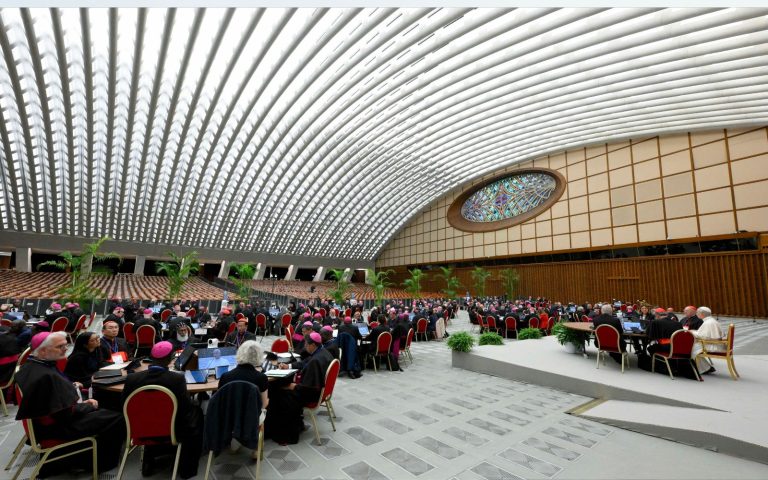
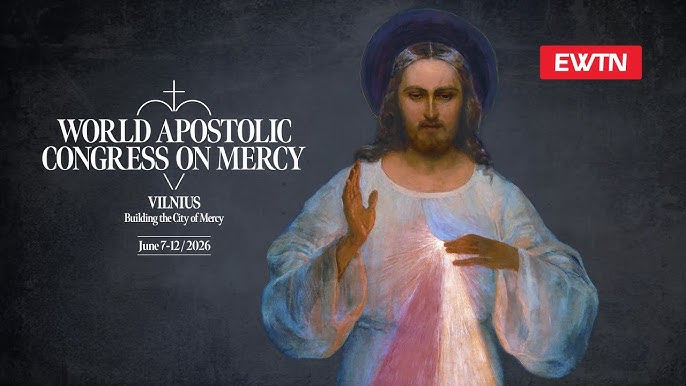
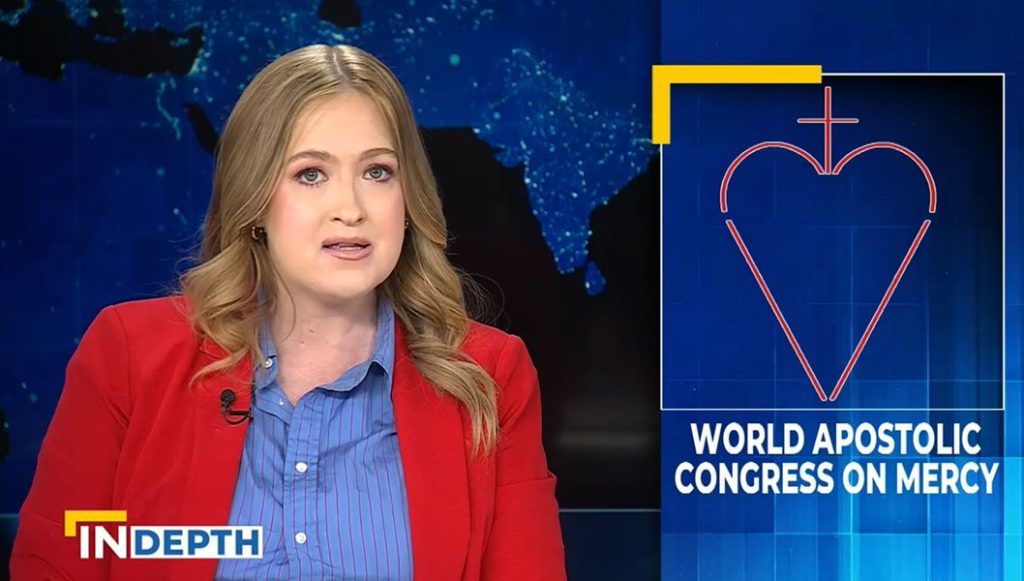
VILNIUS, Lithuania — Thousands of pilgrims from more than 50 countries gathered in the historic streets of Vilnius, Lithuania, for the 6th World Apostolic Congress on Mercy (WACOM 6), transforming the capital into a vibrant testament of faith and forgiveness.
Held from June 7 to 12, 2026, the international gathering returned to the very city where St. Faustina Kowalska lived in the 1930s and where the original image of Divine Mercy was painted. For a small Baltic nation that endured decades of Nazi and Soviet occupation, a time when the Catholic faith had to be practiced in secret, the public display of devotion was a powerful moment of grace.
The Congress, themed “Let Us Build the City of Mercy,” officially opened with a grand Eucharistic procession. Pilgrims followed an 18th-century monstrance carrying the Blessed Sacrament through the city streets, concluding at Savior Hill.
“We gather not merely for a congress, but as pilgrims seeking to encounter anew the merciful love of God,” said Archbishop Gintaras Grušas of Vilnius as he officially opened the event.
A Message from the Holy Father
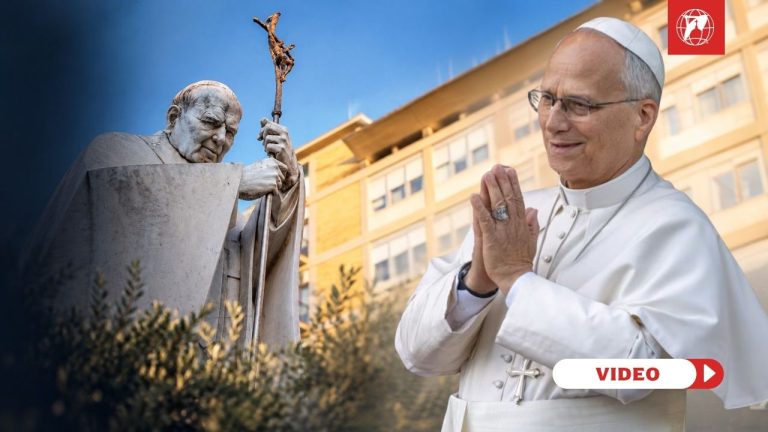
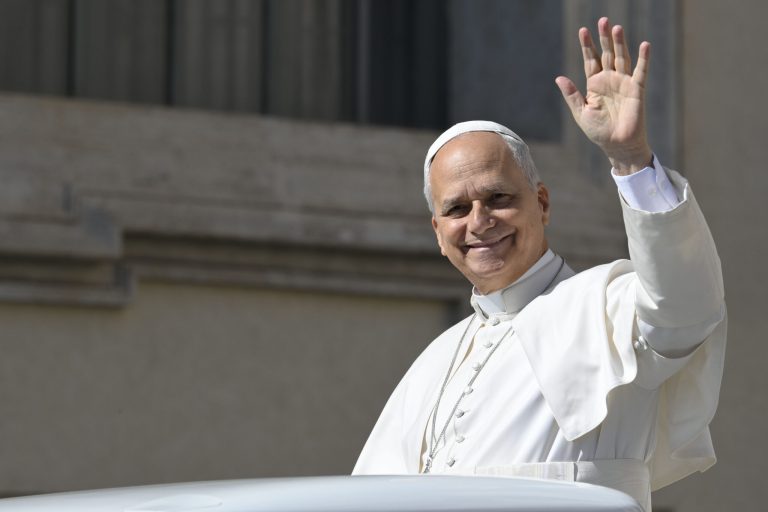
The gathering received a special video message from Pope Leo XIV, who praised the Congress,an initiative strongly desired by his predecessor, Pope St. John Paul II.
Addressing the pilgrims, the President of Lithuania, and Ecumenical Patriarch Bartholomew I of Constantinople, the Pope spoke of the urgent need for God’s mercy in a troubled world.
“Today’s world, with its many fears and anxieties, tensions and wars, presents an increasingly urgent need for peace in the hearts of both individuals and peoples. Amid the vortex of violence that poisons relationships and destroys lives, the mercy of God asks to be allowed into our hearts with its amazing power of renewal. It is this mercy that is capable of turning our lives around, opening the way to love and forgiveness as distinctive features of the face of God manifested through us.”
The Holy Father reminded the faithful that “God never tires of showing His mercy,” and urged them to join their trust in God with a “personal commitment to build a more welcoming and merciful society, beginning with our families”.
Testimonies of Transformation
Throughout the week, the Congress featured workshops, worship music, and powerful testimonies from speakers whose lives were radically changed by the message of Divine Mercy.
John Pridmore, a former London gangster who spent time in a youth prison at age 15, shared the story of his profound conversion in the confessional.
“The priest put his hand on my head, but it wasn’t his hand, it was Jesus’s hand,” Pridmore recalled. “And it was almost like I could feel his blood running down my face. I had no doubts how much I had crucified Jesus in all that evil”.
John Canavan, an Australian who spent 20 years as an “ex-rated” comedian before his reversion to the faith, spoke of the simple prayer that saved him.
“I walked into the back of a church, I knelt down, and I just cried and said, ‘Lord, I don’t even know if I believe you’re there, help me.’ And I got a grace. An incredible grace”.
For Father Chris Alar, Provincial Superior of the Marian Fathers of the Immaculate Conception, the message of Divine Mercy was the catalyst for his vocation, helping him heal from a family tragedy.
“I came to the priesthood and the Marian Fathers specifically because of Divine Mercy,” Father Alar explained. “And the reason was, ironically, the suicide of my grandmother. To learn that we have a merciful God that allows even the salvation of a suicide person who takes their life, changed my life”.
Evangelizing Anew
As the Congress concluded, the focus turned to the future, particularly the challenge of passing the faith to the next generation. While Lithuania remains approximately 75% Catholic, Church leaders acknowledge the need for continued outreach.
“That’s what we need,” Archbishop Grušas told EWTN News correspondent Colm Flynn. “We need that conversion, that evangelization anew of a culture that doesn’t have that experience. People need to meet Jesus, it’s that simple”.
As we reflect on the powerful testimonies from Vilnius, let us resolve to build the “City of Mercy” in our own lives through:
- The Sacrament of Confession: To approach the tribunal of mercy with absolute trust, knowing that, as Pope Leo XIV reminded us, “God never tires of showing His mercy.”
- Eucharistic Adoration: To spend time before the Blessed Sacrament, praying for those who feel they are beyond forgiveness, that they may encounter the healing love of Christ.
- The Holy Rosary: To ask the Blessed Virgin Mary, Mother of Mercy, to intercede for peace in our families and in regions torn by war and violence.
- The Holy Mass: To receive the Eucharist as the ultimate source of strength for our personal commitment to build a more welcoming and merciful society.
- Sacred Scripture: To reflect on Psalm 136, praising God because “His love endures forever.”
To remain informed about Catholic life, teachings, and global Church developments, readers may be encouraged to visit www.ewtnvatican.com for trusted Catholic news and resources.