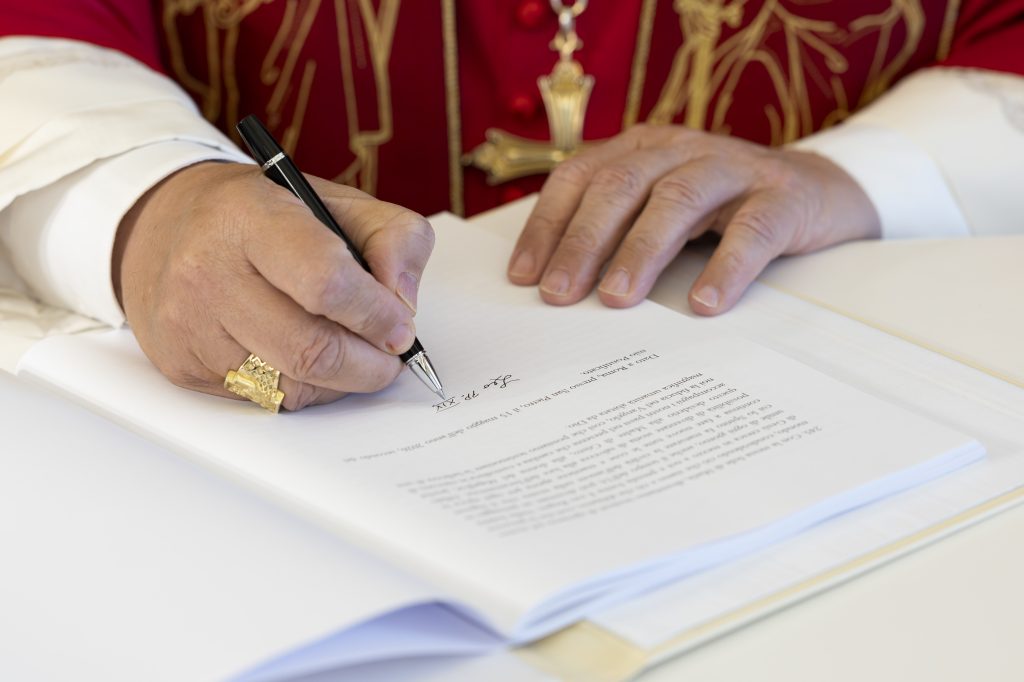
VATICAN CITY — In a “telling signal” of the Church’s engagement with the digital frontier, Pope Leo XIV has released his first encyclical, Magnifica Humanitas (“Magnificent Humanity”). Marking the 135th anniversary of Pope Leo XIII’s Rerum Novarum, the Holy Father has issued an urgent call to “disarm” Artificial Intelligence, framing it as the “new thing” of the 21st century that requires a “consistent ethic of life”.
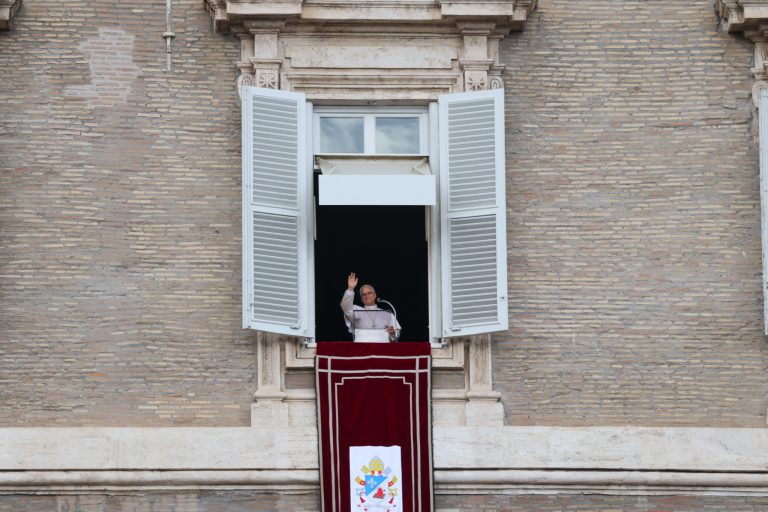
In a solemn address at the Vatican, the Pope warned that while AI offers “unprecedented possibilities,” it also poses an “epochal threat” to human dignity if left unchecked by moral discernment. “Just as the Church addressed the societal upheavals of the Industrial Revolution, we must now provide a moral compass for the digital revolution,” the Pope declared.
A “Call to Discernment” in the Digital Age
The encyclical, released on May 15, 2026, and presented personally by the Pope on May 25, centers on the protection of the human person. Drawing on the “holy audacity” of his predecessors, Pope Leo XIV argues that technology must serve the “whole man” and never reduce individuals to mere data points or cognitive performance.
“No machine can replace the unique freedom, interiority, and capacity for love and worship inherent in every human being,” the Pope stated. He specifically called for the “disarming” of AI, condemning the development of lethal autonomous weapons and the use of algorithms to concentrate power or exclude the vulnerable.
| Magnifica Humanitas | Key Pillars of the Encyclical |
| Historical Parallel | Connects the AI revolution to the Industrial Revolution (Rerum Novarum). |
| Human Dignity | Asserts that machines cannot replace human interiority or the capacity for love. |
| “Disarming” AI | Calls for an end to autonomous weapons and algorithmic domination. |
| Common Good | Urges scientists and engineers to direct AI toward peace and justice. |
| “Civilization of Love” | Reaffirms the need for technology to foster fraternity, not exclusion. |
Building the Walls of Jerusalem
Drawing on the biblical figure of Nehemiah, Pope Leo XIV called on scientists, engineers, political leaders, and parents to participate in a collective, “brick-by-brick” effort to build a future where technology serves human life. He warned against “sleeping” through this transformation, urging the faithful to stay awake and apply critical moral discernment.
The tech world has responded with a mix of “awe and scrutiny.” While some industry leaders have welcomed the Pope’s “call to encounter,” others have questioned the Church’s “delayed response” to the rapid pace of innovation. However, for the global Church, Magnifica Humanitas is seen as a “springtime of justice” for the digital age.
A Missionary Agent for the Future
The encyclical also reflects on the “hidden chapter” of the Church’s own use of technology, with the Pope asking pardon for instances where the Church may have been slow to recognize the moral implications of digital shifts. By invoking the guidance of the Virgin Mary, the Pope concluded his address by reminding the world that the “true greatness” of every person lies in their relationship with the Divine.
As Magnifica Humanitas begins to circulate globally, it serves as a “telling signal” that the Church remains a “field hospital” for humanity, even in the most advanced technological landscapes. In the words of the Holy Father, “The true work of art is but a shadow of the divine perfection, and so too must our technology be a reflection of the dignity of its creator”.
Spiritual Resolution
As we reflect on the “Magnificent Humanity” that Pope Leo XIV calls us to protect, let us resolve to renew our own “digital stewardship.” Let us resolve to:
The Sacrament of Confession: To seek the “restoration of the soul” in a world that often values performance over personhood, turning away from the “chaos of digital distraction.”
Eucharistic Adoration: To pray for scientists and engineers, that they may be “missionary agents” of the common good, guided by the “Splendor of Truth.”
The Holy Rosary: To entrust the development of AI to the maternal protection of Mary, seeking the “conversion of hearts” for those who would use technology for domination.
The Holy Mass: To offer our participation for the “protection of the vulnerable” in the digital age and for a “springtime of ethical innovation.”
Sacred Scripture: To meditate on the Book of Nehemiah, seeking to build the “walls of justice” in our own communities, one “brick” of charity at a time.
To remain informed about Catholic life, teachings, and global Church developments, readers may be encouraged to visit www.ewtnvatican.com for trusted Catholic news and resources.