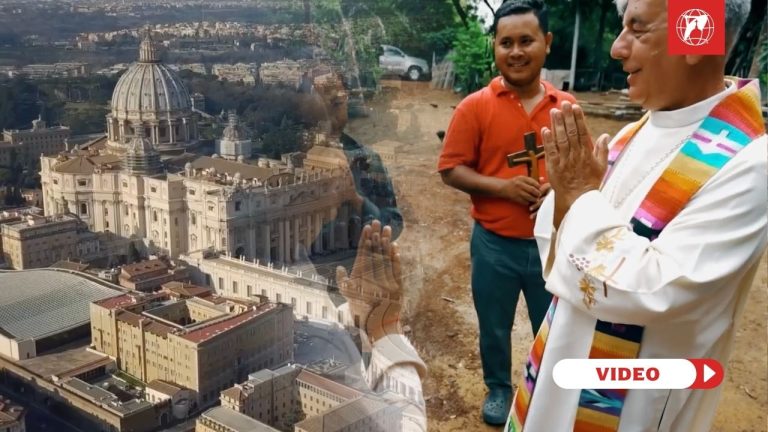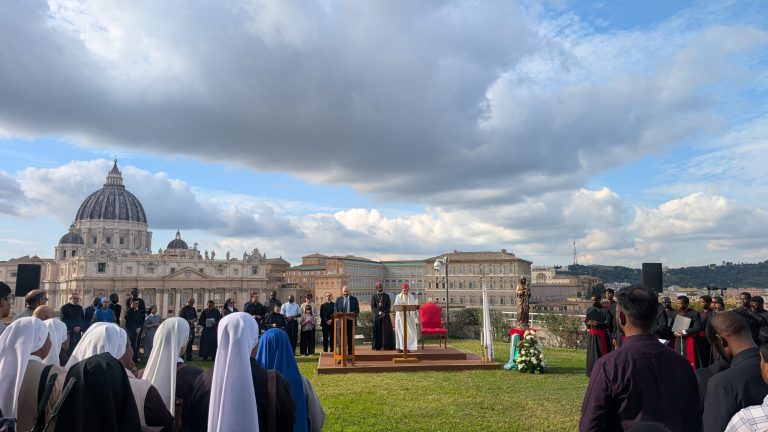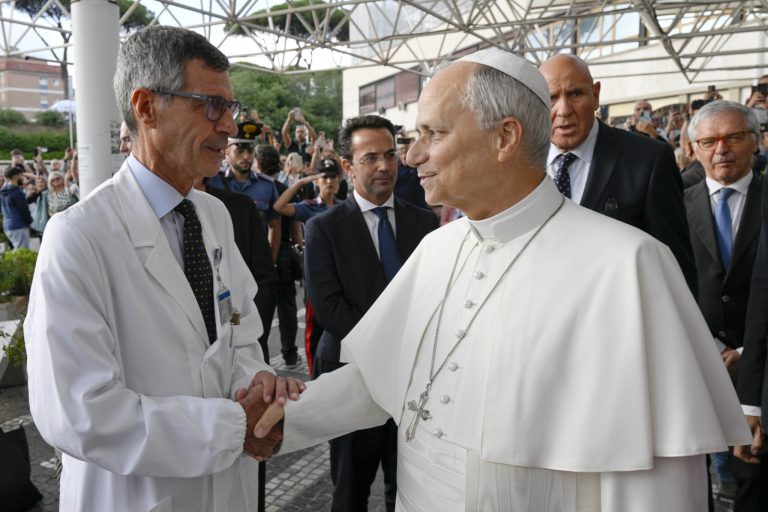
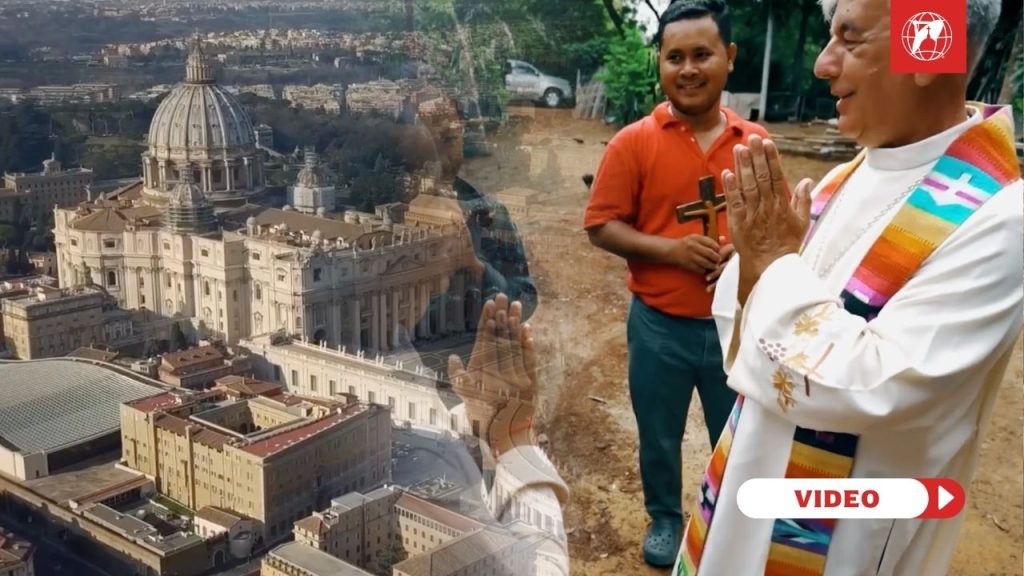
The historic headquarters of Propaganda Fide in Rome has played a central role in the Catholic Church’s missionary activity for more than four centuries. Founded by Pope Gregory XV in 1622, the institution was established to coordinate the Church’s missionary efforts and promote the spread of the Gospel around the world. Today, its mission continues through the Dicastery for Evangelization.
In a visit to the historic palace near Piazza di Spagna, Father Tadeusz Novak, secretary general of the Pontifical Society for the Propagation of the Faith, offers a glimpse into the history of the institution and its enduring role in the Church’s evangelizing mission.
A mission distinct from colonial ambitions
One of the founding principles of Propaganda Fide was to ensure that evangelization remained distinct from the political ambitions of colonial powers. Father Novak explains that the pope deliberately chose the palace because of its proximity to the Spanish embassy to the Holy See.
The aim was to ensure that the Church’s presence in newly reached territories would be associated with proclaiming the Gospel rather than advancing colonial interests.
The institution also became a center for missionary formation. Pope Urban VIII established the Urban College in 1627 to prepare priests for service in mission territories. Among its notable former students was St. John Henry Newman, who lived in the palace and celebrated Mass in its private chapel.
Today, the Pontifical Urban University continues to train priests and missionaries from around the world.
Supporting the Church’s mission worldwide
The Pontifical Mission Societies remain central to the Church’s missionary cooperation. They comprise four organizations: the Society for the Propagation of the Faith, the Society of the Holy Childhood, the Society of St. Peter the Apostle, and the Pontifical Missionary Union.
Through prayer, formation, and financial assistance, they support local Churches in territories where the Catholic community is young, developing, or in need of particular assistance.
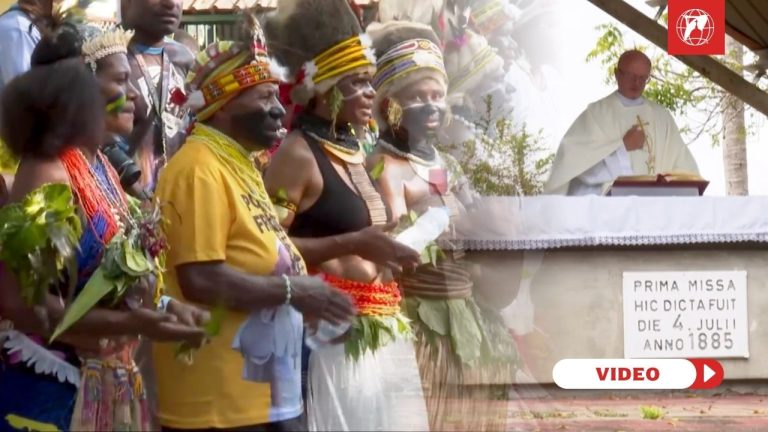
The scale of this work is global, with more than 1,100 mission dioceses and ecclesiastical territories receiving support. These include communities throughout Africa and Oceania, as well as parts of Asia and Latin America.
From Mongolia to the world: Sharing missionary stories
The report also highlights the young Catholic Church in Mongolia, where journalist Marie-Lucile Kubacki describes discovering a small community of approximately 1,700 Catholics in a country of around 3.5 million people.
Her experience of the Church in Mongolia became a turning point, helping her recognize how the Gospel becomes present and alive through the faith journeys of local communities.
Kubacki now works with Agenzia Fides, the Church’s missionary news agency, founded in 1927. Based within the historic headquarters of Propaganda Fide, the agency shares stories from local Churches with readers around the world through its multilingual publications and international network of correspondents.
From its origins in seventeenth-century Rome to the communities it serves today, the Church’s missionary network continues to carry out the same essential task: proclaiming Christ and helping local Churches grow in faith.
Adapted by Jacob Stein. Produced by Bénédicte Cedergren; Video Edited by Giada D’Ottavi; Special thanks & Credits to Propaganda Fide, Agenzia Fides.